
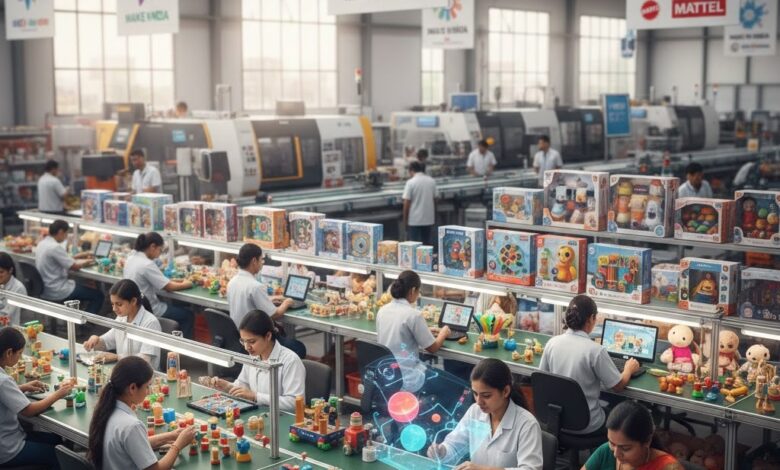
The Indian toy industry, is currently undergoing a historic metamorphosis. Once heavily dependent on low-cost imports, the sector has emerged as a global contender, transforming from a net importer to a net exporter within just a few years.
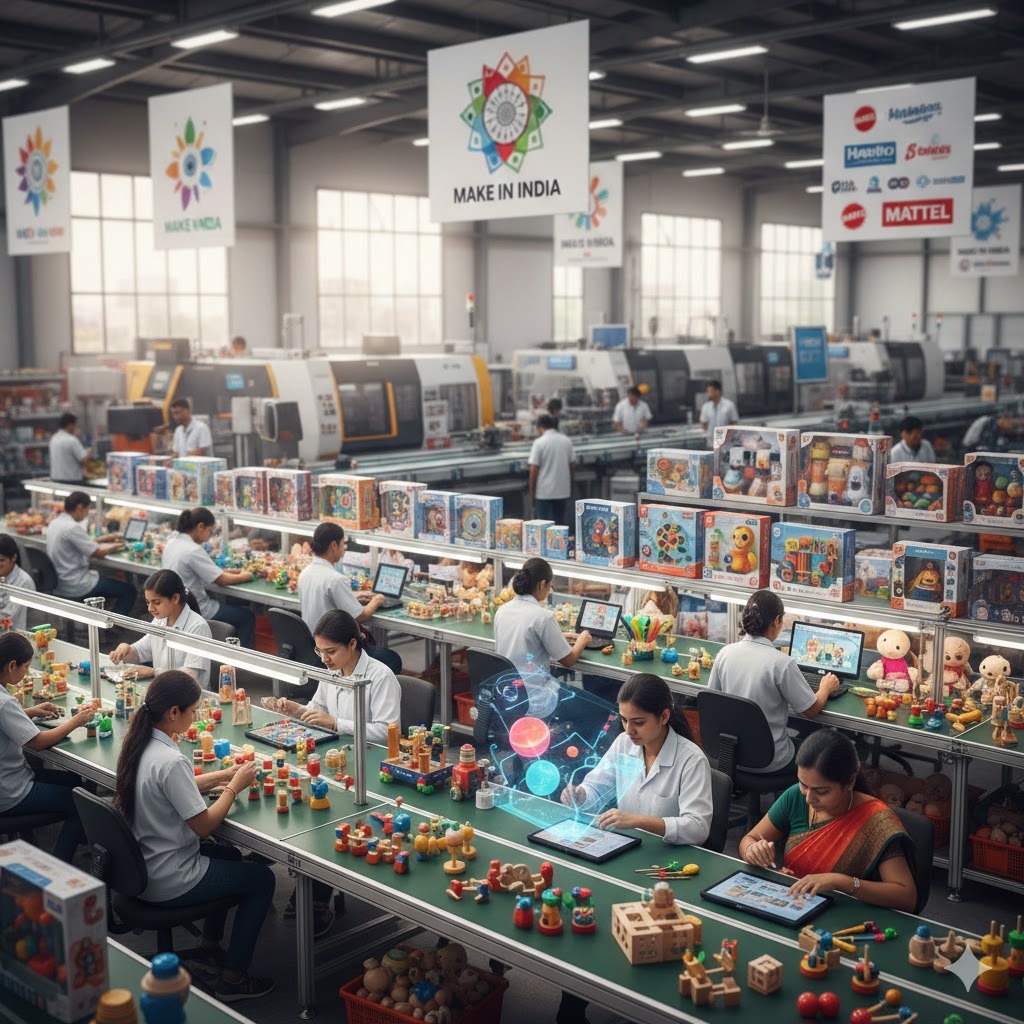
As of 2026, India is no longer just a consumer of global toy brands but a significant manufacturing hub, fueled by the “Make in India” initiative and a strategic shift in global supply chains.
The Growth Story: By the Numbers
The industry’s trajectory reflects one of the most successful examples of import substitution in modern Indian economics.
- Market Valuation: The Indian toy market, valued at approximately $1.9 billion in 2024, is projected to reach $4.7 billion by 2033, growing at a CAGR of over 10%.
- Trade Reversal: In a dramatic shift, toy imports into India plummeted by nearly 80% (from $304 million in FY19 to $65 million in FY24), while exports grew by 40% in the same period.
- Global Reach: Indian-made toys are now exported to over 150 countries, with the United States being the largest buyer.
Key Drivers of the “Toy Revolution”
1. Government Policy & Quality Control
The Indian government implemented a multi-pronged strategy to protect and promote local manufacturers:
- Import Duties: Basic Customs Duty (BCD) on toys was hiked progressively from 20% to 70% to curb the influx of cheap, sub-standard imports.
- Quality Control Orders (QCO): Since 2020, all toys sold in India must bear the BIS (Bureau of Indian Standards) mark, ensuring they are non-toxic and safe. This acted as a non-tariff barrier against low-quality foreign goods.
- National Action Plan for Toys (NAPT): This plan promotes 19 toy clusters across states like Karnataka (Koppal), Uttar Pradesh, and Tamil Nadu, providing shared infrastructure and testing labs.
2. The “China Plus One” Strategy
Global giants like Hasbro, Mattel, and Spin Master have increasingly turned to India to diversify their manufacturing away from China. India’s large pool of skilled labor for “labor-intensive” toys—such as plush toys and handcrafted dolls—gives it a competitive edge that is difficult to automate.
3. Rise of Tech & STEM Toys
Indian parents are moving away from purely recreational toys toward educational and STEM-based (Science, Technology, Engineering, Math) kits. Startups like PlayShifu and Skillmatics have gained international acclaim for integrating AI, Augmented Reality (AR), and sustainable materials into play.
Emerging Hubs and Segments
The industry is evolving into specialized geographic and product-based clusters:
- Manufacturing Hubs: Maharashtra, Karnataka (home to the massive Aequs SEZ), Tamil Nadu, and the NCR (National Capital Region).
- Sustainability Trend: There is a massive resurgence in traditional wooden toys (like Channapatna and Kondapalli) as eco-conscious parents seek plastic-free, biodegradable alternatives.
- Electronic & AI Toys: While India still imports some electronic components, the 2025-26 budget has prioritized R&D funding for domestic electronic toy manufacturing.
Challenges on the Horizon
Despite the optimism, the industry faces 2026 with specific hurdles:
- Raw Material Costs: High import duties on specialized plastics and electronic components can increase production costs.
- Global Trade Volatility: Recent shifts in US trade policies and tariffs (approaching 50% in some cases) have forced Indian exporters to remain agile and explore markets in Europe and Southeast Asia.
- Unorganized Sector: Over 60% of the industry remains unorganized or micro-scale, making it difficult for small players to meet stringent BIS standards without further government support.
The Road Ahead
The government is reportedly finalizing a massive ₹13,000-crore incentive scheme (similar to a PLI scheme) to further boost turnover, localization, and employment. By focusing on branding, design, and sustainable packaging, India is on track to become a “Global Toy Capital” by 2030.