

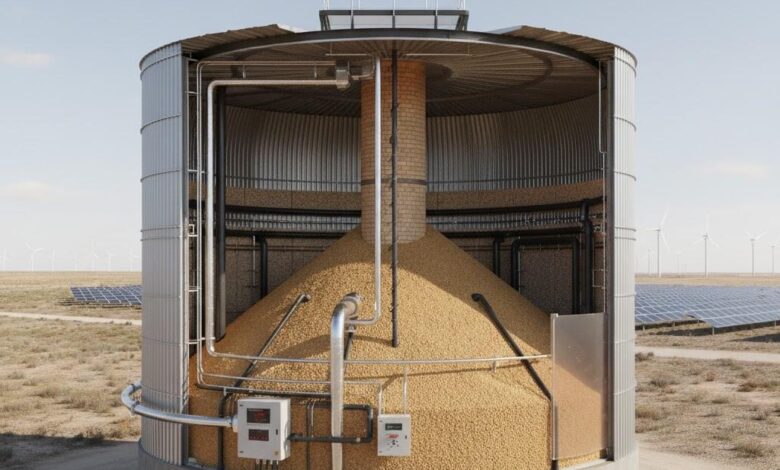
As the world increasingly shifts towards renewable energy sources like solar and wind, a critical challenge emerges: how to store this intermittent energy for times when the sun isn’t shining or the wind isn’t blowing. Traditional battery technologies often rely on rare earth minerals, can be expensive, and have environmental footprints of their own. Enter the sand battery – a seemingly simple yet innovative solution that promises to revolutionize grid-scale energy storage.
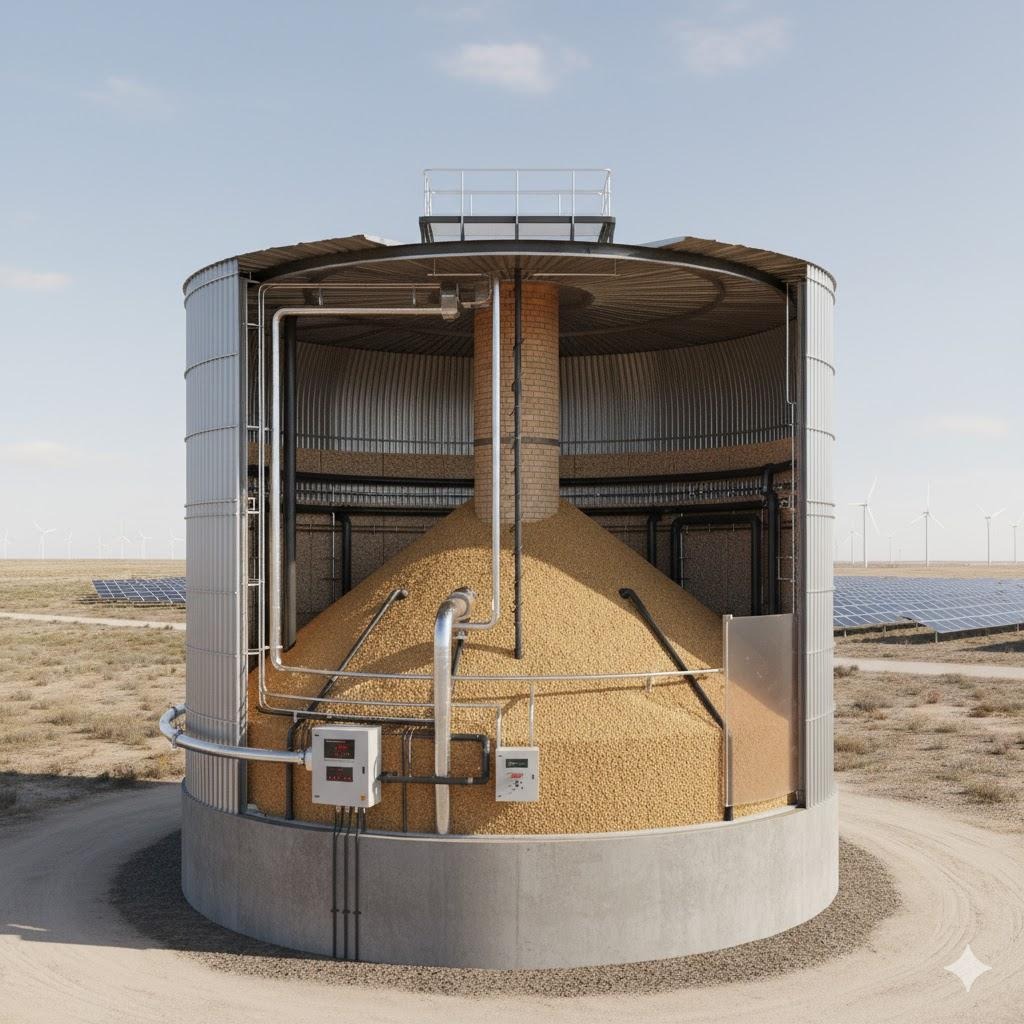
What is a Sand Battery?
At its core, a sand battery is a thermal energy storage system that uses sand (or a similar granular material) as its storage medium. Unlike chemical batteries that store energy electrochemically, sand batteries store energy as heat. The concept is straightforward: excess electricity from renewable sources is used to heat the sand to very high temperatures, often hundreds of degrees Celsius. This heat is then stored within the sand for extended periods due to sand’s excellent thermal insulation properties. When energy is needed, the heat is extracted and used to produce steam, which can then drive a turbine to generate electricity, much like a conventional power plant.
How Do They Work?
The process typically involves:
- Charging: Electrical heaters, powered by surplus renewable energy, are embedded within a large, insulated container filled with sand. The sand is heated to temperatures that can range from 500°C to over 1000°C.
- Storage: Once heated, the sand can retain this thermal energy for days or even weeks with minimal heat loss, thanks to effective insulation.
- Discharging: When electricity is required, a heat exchanger transfers the stored thermal energy from the sand to a working fluid (often water), generating high-pressure steam. This steam then powers a steam turbine connected to a generator, converting the heat back into electricity for the grid.
Advantages of Sand Batteries:
- Abundant and Low-Cost Materials: Sand is one of the most common and inexpensive materials on Earth, making the construction and operation of sand batteries significantly cheaper than traditional battery technologies.
- Environmental Friendliness: Sand is non-toxic, non-flammable, and does not pose the same environmental concerns as the extraction and disposal of materials used in lithium-ion or other chemical batteries.
- Long Lifespan: Unlike chemical batteries that degrade over cycles, sand can theoretically be heated and cooled almost indefinitely without losing its energy storage capacity.
- Scalability: Sand batteries can be built to a very large scale, making them ideal for grid-level energy storage. Their modular design allows for expansion as energy demands grow.
- Safety: They are inherently safer than chemical batteries, as there is no risk of thermal runaway or fire.
- High Efficiency: While there are some energy losses during conversion, the overall efficiency of storing and retrieving heat can be quite good for long-duration storage.
Challenges and Future Outlook:
Despite their promising advantages, sand batteries do face some challenges:
- Conversion Losses: The process of converting electricity to heat and then back to electricity incurs some energy losses. Research is ongoing to optimize these conversion efficiencies.
- Footprint: While the materials are cheap, the physical size of a large-scale sand battery can be substantial.
- Startup Time: Heating a large volume of sand takes time, meaning sand batteries are better suited for long-duration, rather than instantaneous, energy release.
Despite these hurdles, the potential for sand batteries is immense. Several pilot projects are already demonstrating their viability, with Finland being a notable pioneer with the world’s first commercial sand battery in operation. As renewable energy penetration continues to increase, the demand for reliable and affordable long-duration energy storage solutions will only grow. Sand batteries, with their simplicity, cost-effectiveness, and environmental benefits, offer a compelling and sustainable path forward, turning a common grain into a powerful tool for a cleaner energy future.