The Hidden Power Beneath the Earth: How Rare Earths Are Shaping the New Geopolitical Order In the quiet mines of Inner Mongolia, far from the bustling cities of Beijing or Shanghai, lie the seeds of the 21st century’s most strategic revolution — rare earth elements (REEs). These 17 elusive minerals, once considered geological curiosities, now stand at the heart of modern civilization. From the smartphones in our hands to the electric vehicles gliding on our roads, and the satellites orbiting above, rare earths silently power our world. But beyond their industrial importance, rare earths have ignited a new era of geopolitics — one defined not by oil fields or gas pipelines, but by the control of the minerals essential for technology, defense, and the green transition. The New Oil of the Digital Age In the 20th century, nations fought and bargained over oil. In the 21st, the contest is over lithium, cobalt, and rare earths. Unlike their name suggests, rare earths are not particularly rare; they are found in small quantities across the planet. What makes them special is the difficulty of extracting and refining them — a process that is technologically complex, environmentally taxing, and capital-intensive. These minerals — such as neodymium, dysprosium, terbium, yttrium, and lanthanum — are indispensable for manufacturing magnets in wind turbines, batteries in electric vehicles, guidance systems in missiles, and chips in smartphones. In essence, they are the lifeblood of both the green economy and national security industries. China: The Rare Earth Superpower For over three decades, China has quietly built a monopoly on the rare earth supply chain. By the early 2000s, it controlled more than 90% of global production and refining capacity. Through strategic state policies, low-cost labor, and early investments in refining technology, China established a dominance that few noticed — until recently. Beijing’s control gives it immense geopolitical leverage. In 2010, during a diplomatic dispute with Japan, China briefly halted rare earth exports — a move that sent shockwaves through global markets. Since then, countries have awakened to the realization that the “green future” could hinge on China’s willingness to supply these critical materials. Today, though China’s share has reduced slightly (hovering around 60–70%), its dominance in processing and refining still exceeds 85%, making it the undisputed rare earth superpower. The Rising Contenders The world is now in a race to diversify supply chains and reduce dependence on China. United States: Once a major producer, the U.S. is reviving its rare earth industry, especially around the Mountain Pass Mine in California, which was dormant for years. Washington has also forged strategic partnerships with Australia and Canada to secure alternate sources. Australia: With vast reserves and a stable political environment, Australia’s Lynas Corporation is the only significant non-Chinese producer of processed rare earths. Canberra’s alliance with Tokyo and Washington is reshaping global supply chains. India: India, rich in monazite sands found along its southern coasts, holds significant potential. The Indian government has begun integrating rare earth exploration into its national resource strategy, particularly for defense and renewable energy. Africa: Countries like Burundi, Madagascar, and Tanzania are emerging as new players, attracting Western and Asian investments for exploration and extraction. Greenland and the Arctic: Melting ice caps are revealing new mineral opportunities, setting the stage for future geopolitical competition among Arctic nations. Rare Earths and the New World Order The struggle for rare earths is redefining alliances and trade routes. Nations are forming strategic blocs, investing in “critical mineral partnerships”, and stockpiling reserves much like oil in the last century. The Quad alliance (U.S., India, Japan, and Australia) is emphasizing joint exploration and supply chain resilience. The European Union is crafting policies for sustainable mining and recycling to meet its clean energy goals. Meanwhile, China continues to strengthen its grip by investing in mines across Africa and Southeast Asia — a modern echo of resource diplomacy. The Future: Green Energy Meets Resource Realism As the world transitions to net-zero emissions, demand for rare earths is expected to surge nearly fivefold by 2040. Wind turbines, EVs, drones, and smart grids will need these minerals in quantities that could reshape trade balances and even military strategies. However, this new dependence comes with challenges — environmental damage, geopolitical vulnerabilities, and technological bottlenecks. Sustainable extraction, circular recycling of rare earth magnets, and innovation in substitutes will define the next frontier of industrial evolution. Conclusion: The Silent Architects of Tomorrow In this new era, power will not just belong to nations with the most soldiers or the biggest economies — but to those who control the minerals powering the technologies of the future. Just as oil shaped the 20th century, rare earth elements are quietly sculpting the 21st. Beneath the surface of the Earth, and behind every chip, battery, and turbine, lies a hidden currency — one that will determine who leads and who follows in the new geopolitical order. The nations that understand this truth, and act wisely to secure and sustain their mineral sovereignty, will define the story of tomorrow.

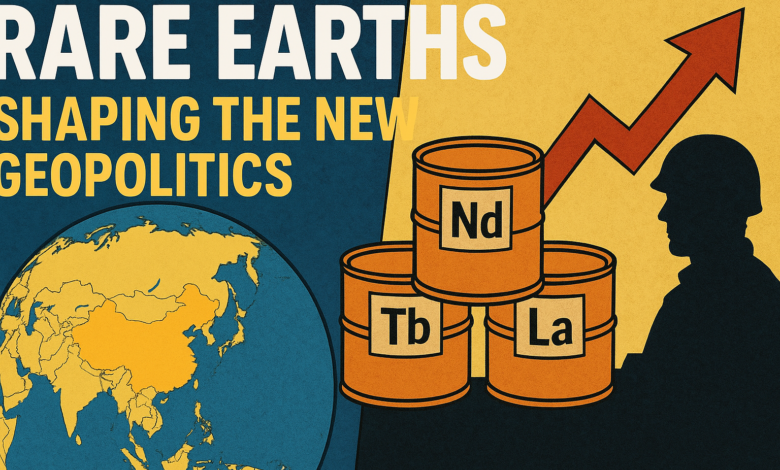
In the quiet mines of Inner Mongolia, far from the bustling cities of Beijing or Shanghai, lie the seeds of the 21st century’s most strategic revolution — rare earth elements (REEs). These 17 elusive minerals, once considered geological curiosities, now stand at the heart of modern civilization. From the smartphones in our hands to the electric vehicles gliding on our roads, and the satellites orbiting above, rare earths silently power our world.
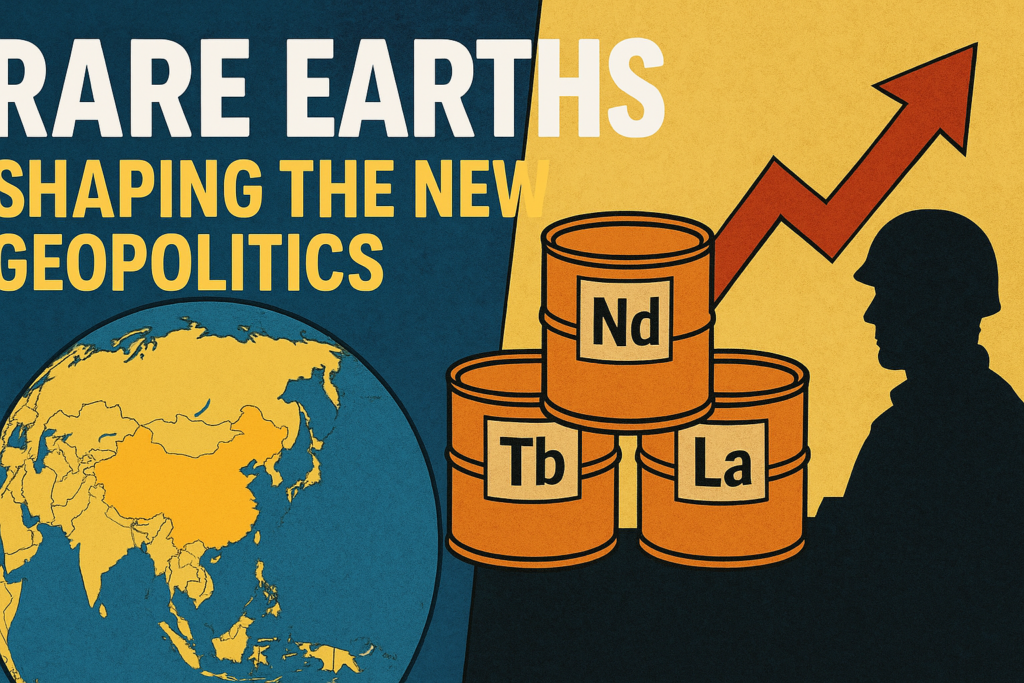
But beyond their industrial importance, rare earths have ignited a new era of geopolitics — one defined not by oil fields or gas pipelines, but by the control of the minerals essential for technology, defense, and the green transition.
The New Oil of the Digital Age
In the 20th century, nations fought and bargained over oil. In the 21st, the contest is over lithium, cobalt, and rare earths.
Unlike their name suggests, rare earths are not particularly rare; they are found in small quantities across the planet. What makes them special is the difficulty of extracting and refining them — a process that is technologically complex, environmentally taxing, and capital-intensive.
These minerals — such as neodymium, dysprosium, terbium, yttrium, and lanthanum — are indispensable for manufacturing magnets in wind turbines, batteries in electric vehicles, guidance systems in missiles, and chips in smartphones. In essence, they are the lifeblood of both the green economy and national security industries.
China: The Rare Earth Superpower
For over three decades, China has quietly built a monopoly on the rare earth supply chain. By the early 2000s, it controlled more than 90% of global production and refining capacity. Through strategic state policies, low-cost labor, and early investments in refining technology, China established a dominance that few noticed — until recently.
Beijing’s control gives it immense geopolitical leverage. In 2010, during a diplomatic dispute with Japan, China briefly halted rare earth exports — a move that sent shockwaves through global markets. Since then, countries have awakened to the realization that the “green future” could hinge on China’s willingness to supply these critical materials.
Today, though China’s share has reduced slightly (hovering around 60–70%), its dominance in processing and refining still exceeds 85%, making it the undisputed rare earth superpower.
The Rising Contenders
The world is now in a race to diversify supply chains and reduce dependence on China.
- United States: Once a major producer, the U.S. is reviving its rare earth industry, especially around the Mountain Pass Mine in California, which was dormant for years. Washington has also forged strategic partnerships with Australia and Canada to secure alternate sources.
- Australia: With vast reserves and a stable political environment, Australia’s Lynas Corporation is the only significant non-Chinese producer of processed rare earths. Canberra’s alliance with Tokyo and Washington is reshaping global supply chains.
- India: India, rich in monazite sands found along its southern coasts, holds significant potential. The Indian government has begun integrating rare earth exploration into its national resource strategy, particularly for defense and renewable energy.
- Africa: Countries like Burundi, Madagascar, and Tanzania are emerging as new players, attracting Western and Asian investments for exploration and extraction.
- Greenland and the Arctic: Melting ice caps are revealing new mineral opportunities, setting the stage for future geopolitical competition among Arctic nations.
Rare Earths and the New World Order
The struggle for rare earths is redefining alliances and trade routes. Nations are forming strategic blocs, investing in “critical mineral partnerships”, and stockpiling reserves much like oil in the last century.
The Quad alliance (U.S., India, Japan, and Australia) is emphasizing joint exploration and supply chain resilience. The European Union is crafting policies for sustainable mining and recycling to meet its clean energy goals. Meanwhile, China continues to strengthen its grip by investing in mines across Africa and Southeast Asia — a modern echo of resource diplomacy.
The Future: Green Energy Meets Resource Realism
As the world transitions to net-zero emissions, demand for rare earths is expected to surge nearly fivefold by 2040. Wind turbines, EVs, drones, and smart grids will need these minerals in quantities that could reshape trade balances and even military strategies.
However, this new dependence comes with challenges — environmental damage, geopolitical vulnerabilities, and technological bottlenecks. Sustainable extraction, circular recycling of rare earth magnets, and innovation in substitutes will define the next frontier of industrial evolution.
Conclusion: The Silent Architects of Tomorrow
In this new era, power will not just belong to nations with the most soldiers or the biggest economies — but to those who control the minerals powering the technologies of the future.
Just as oil shaped the 20th century, rare earth elements are quietly sculpting the 21st. Beneath the surface of the Earth, and behind every chip, battery, and turbine, lies a hidden currency — one that will determine who leads and who follows in the new geopolitical order.
The nations that understand this truth, and act wisely to secure and sustain their mineral sovereignty, will define the story of tomorrow.